Running a restaurant already requires constant coordination. Tables need to turn, staff need support, guests need clarity, and the menu somehow needs to stay accurate while ingredient costs keep moving.
That is why QR code menus are becoming less of a novelty and more of a standard operating tool.
They do not replace hospitality. They remove friction around one of the most used parts of the guest experience.
The menu is part of the service system
Many restaurants still treat the menu like a static document.
But the menu shapes how fast guests decide, what questions staff need to answer, and how confidently people order.
When a menu is hard to browse, out of date, or unclear, the whole room absorbs that friction.
QR menus give restaurants a cleaner way to manage that experience:
- guests can access the latest menu immediately
- staff spend less time clarifying avoidable questions
- changes can go live without waiting for reprints
The operational gain is small in each moment, but meaningful across an entire service.
Guests increasingly expect low-friction access
Most guests do not want a complicated ordering experience.
They want to sit down, scan quickly, browse clearly, and decide without confusion.
This matters even more during busy periods, when a delay at the start of the meal can affect the perceived pace of the whole visit.
Clarity helps the room feel calmer
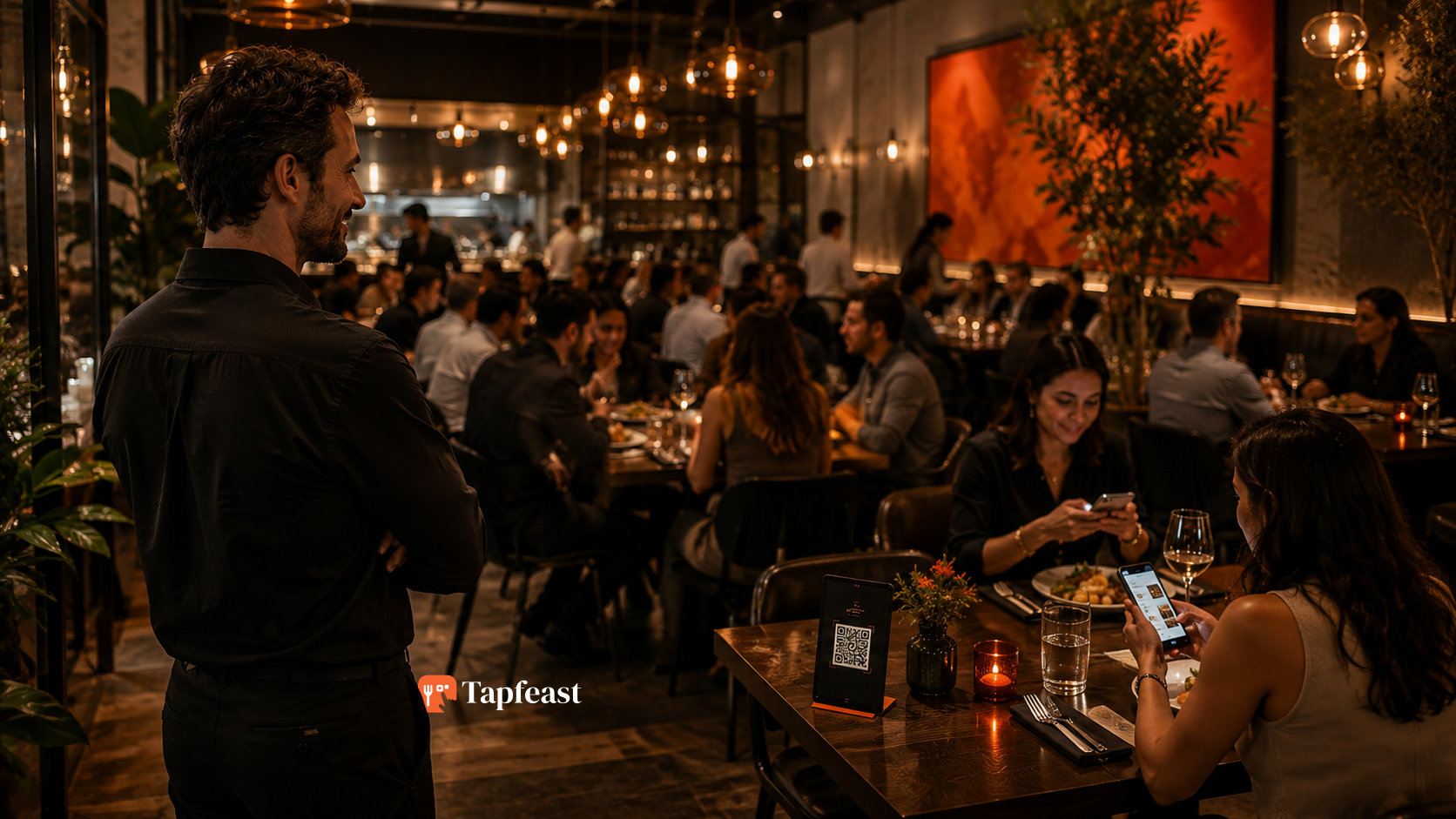
When guests can check dishes, prices, and updates on their own phone, the ordering moment tends to feel smoother.
That does not remove the role of the server. It gives the server more room to focus on hospitality instead of repetitive menu clarification.
Printed menus carry hidden costs
Restaurants often underestimate how much printed menus cost over time.
The expense is not only the print job itself. It is also the operational drag around every update.
- price changes
- sold-out items
- seasonal swaps
- damaged menus
- manual explanations from staff
QR menus reduce that drag. A restaurant can update pricing, hide unavailable dishes, or feature a special without replacing stacks of printed material.
Digital menus can improve what guests notice
A well-structured QR menu does more than display items.
It helps direct attention.
Restaurants can make bestsellers easier to spot, structure categories more clearly, and support decisions with light context such as:
- Chef’s favourite
- Perfect for sharing
- Pairs well with…
- Available this weekend only
These cues help guests decide faster and can increase visibility for the dishes a restaurant most wants to sell.
Small operators often benefit the most
QR menus are not just useful for large chains.
Independent restaurants often feel the benefit faster because every staff minute, every menu correction, and every table interaction matters more.
For a smaller team, a menu that stays current without reprinting can remove a surprising amount of weekly friction.
Better menu systems support better hospitality
Restaurant technology works best when it makes the guest experience feel simpler, not more technical.
That is the real value of a good QR menu. It helps the restaurant stay accurate, helps guests feel more in control, and gives staff more time for the human side of service.
TapFeast helps restaurants create branded QR menus that are easy to update, easy to browse, and easier to manage as service changes in real time.
Because modern hospitality does not need more complexity.
It needs fewer points of friction.