Walk into any great restaurant and you’ll notice something immediately.
It isn’t the menu.
It isn’t the decor.
It isn’t even the food.
It’s how you feel.
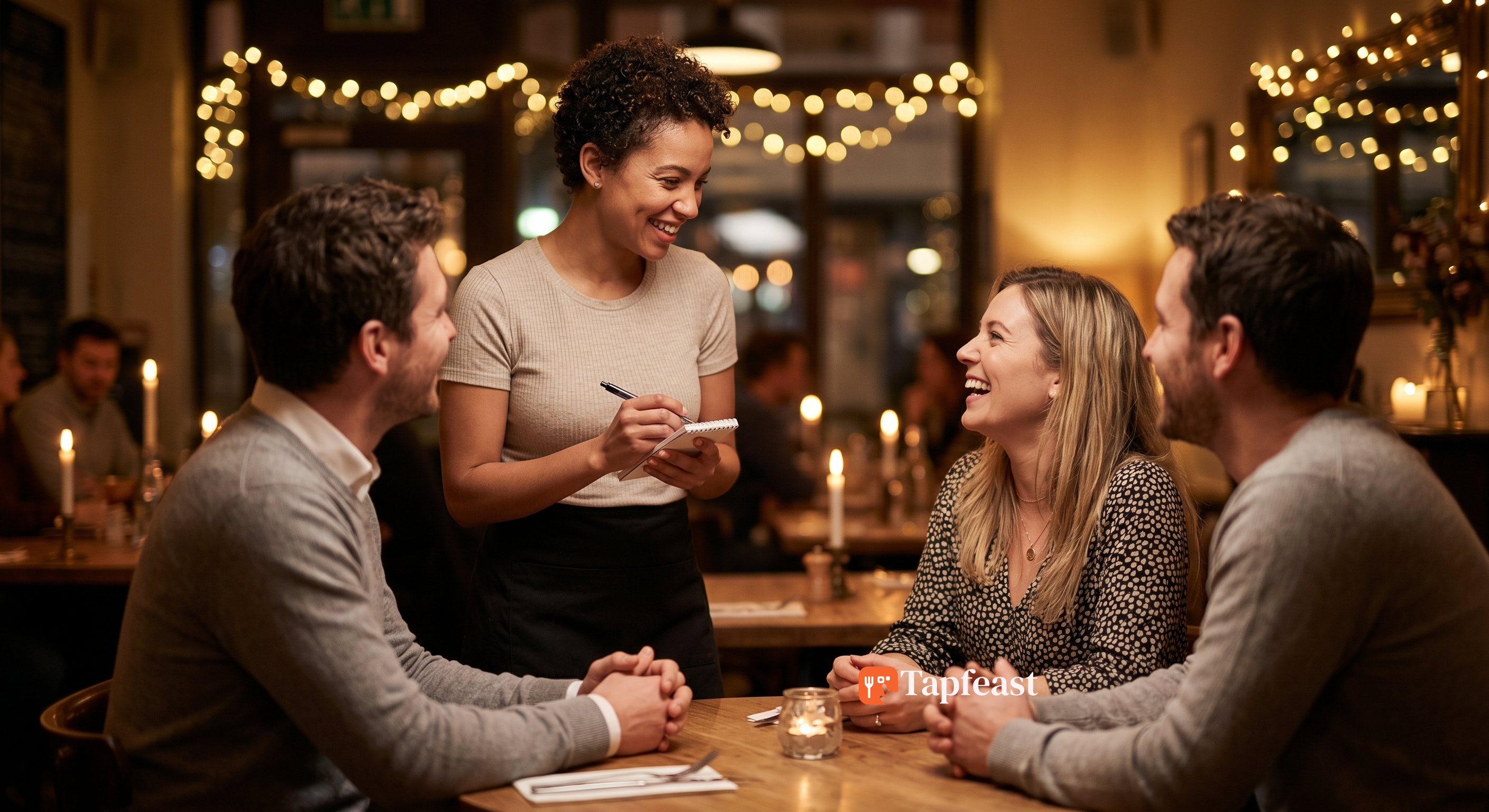
Great hospitality is built on human connection. A warm welcome. A thoughtful recommendation. A server who remembers your favorite drink. A chef who takes pride in every plate leaving the kitchen.
Technology should never replace those moments.
Instead, it should create more opportunities for them.
That’s the mission behind TapFeast. We build a lightweight, intuitive operating system for independent restaurants designed to help owners and front-of-house teams spend less time fighting with software and more time serving guests. Simple by design, consciously small, and easy enough for even the least tech-savvy restaurant owner to use.
The Real Challenge with Modern Restaurant Operations
Restaurant owners wear too many hats.
On any given day, you might be reviewing inventory in the morning, responding to customer inquiries during lunch service, coordinating staff schedules in the afternoon, and handling reservations while preparing for the dinner rush.
Then there’s marketing.
Then there’s payroll.
Then there’s menu updates.
Then there’s customer feedback.
Many of these tasks are necessary. Very few of them directly improve the guest experience.
The reality is that running a restaurant often feels like managing dozens of small businesses simultaneously.
You’re a host.
A marketer.
A manager.
A buyer.
A customer service representative.
And somehow, you’re still expected to create a memorable dining experience every single day.
The challenge isn’t a lack of dedication. Most restaurant owners are incredibly passionate about their craft.
The challenge is that administrative work continues to expand.
When staff spend their shifts handling repetitive tasks or navigating complicated software, they have less time available for the actual people sitting at their tables.
And in hospitality, people are everything.
The Hidden Cost of Constant Interruptions
Most restaurant owners don’t realize how much time is lost to interruptions.
A phone rings during the lunch rush.
A customer wants to know whether a dish contains nuts.
Someone calls to ask for your opening hours.
Another guest wants to reserve a table for six people next Friday.
A delivery driver arrives unexpectedly.
A staff member has a scheduling question.
None of these interruptions are unreasonable.
In fact, they are signs that people want to engage with your business.
The challenge is that they rarely arrive at convenient moments.
Every interruption forces a team member to stop what they’re doing, switch context, answer a question, and then attempt to return to their original task.
Research consistently shows that context switching reduces efficiency and increases mistakes. While restaurants operate differently than offices, the principle remains the same.
The more frequently your team gets interrupted, the harder it becomes to stay focused on guests.
The result isn’t simply lost time.
It’s lost attention.
Servers become rushed.
Hosts become distracted.
Managers spend their evenings reacting instead of leading.
Over weeks and months, these small interruptions create significant operational friction.
The good news is that many of them are preventable.
When guests can easily access your menu, reserve a table online, find your hours, check dietary information, or view your specials without needing to call, everyone benefits.
Guests receive instant answers.
Staff gain back valuable time.
And your team can focus on hospitality instead of administration.
Why the Best Restaurant Technology Stays in the Background
The most effective restaurant technology is often invisible.
Guests don’t visit a restaurant because it has a sleek QR code.
They don’t choose a restaurant because it has a modern reservation widget.
They don’t recommend a restaurant because its software was impressive.
They visit because they want an incredible meal.
A memorable experience.
A celebration.
A conversation.
A moment away from their everyday lives.
Technology should support those goals, not compete with them.
Smart technology simply removes friction.
It quietly handles repetitive tasks so staff can focus on people.
Consider a few simple examples:
Seamless Booking
A reservation can be made in seconds without interrupting a busy host.
Guests get immediate confirmation.
Staff spend less time answering phones.
Instant Adaptability
A seasonal special can be added instantly.
A sold-out item can be removed immediately.
Prices can be adjusted without reprinting dozens of menus.
Effortless Information Access
Guests can quickly access dietary information, allergen details, hours of operation, and menu descriptions whenever they need them.
No waiting.
No searching.
No frustration.
None of these improvements replace hospitality.
They create more opportunities for it.
When technology handles logistics, people can focus on relationships.
And relationships are what guests remember.
Today’s Guests Expect Convenience
Guest expectations have changed dramatically over the last decade.
People book flights online.
Order groceries online.
Schedule appointments online.
Read reviews online.
Research businesses online.
Restaurants are no exception.
This doesn’t mean guests want a fully automated dining experience.
Most don’t.
People still value personal recommendations.
They still enjoy conversations with knowledgeable servers.
They still appreciate genuine human attention.
What they don’t enjoy is unnecessary friction.
They don’t want to call a restaurant simply to see a menu.
They don’t want to discover upon arrival that a featured item is unavailable.
They don’t want to scroll through blurry photos of outdated menus on social media.
Modern guests expect information to be available when they need it.
Not because they’re impatient.
Because convenience has become the standard in nearly every industry.
The restaurants that recognize this shift are often able to create a smoother experience from the very first interaction.
Long before a guest sits down at a table, their experience has already begun.
It starts when they discover your restaurant online.
It continues when they browse your menu.
It continues again when they decide whether or not to make a reservation.
Every step shapes their perception of your business.
Technology plays an important role in that journey.
But the best technology feels effortless.
Guests shouldn’t notice the technology.
They should simply notice that everything works.
Finding Balance: Physical Menus and Digital Menus Can Work Together
One of the biggest misconceptions in hospitality is that restaurants must choose between traditional and digital experiences.
In reality, many successful restaurants use both.
Printed menus continue to provide tremendous value.
They feel familiar.
They contribute to ambiance.
They reinforce branding.
They create a tactile experience that many guests enjoy.
A beautifully designed menu can become part of the restaurant’s identity.
At the same time, digital menus offer advantages that printed menus simply cannot.
They can be updated instantly.
They can showcase daily specials.
They can display allergy information.
They can include beautiful food photography.
They can be accessed before guests even arrive.
This isn’t an either-or decision.
It’s a both-and opportunity.
A printed menu can remain the centerpiece of the dining experience while a digital menu provides flexibility behind the scenes.
Together, they create a hybrid approach that benefits both guests and restaurant operators.
The goal isn’t to replace tradition.
The goal is to strengthen it.
Simplicity Beats Complexity Every Time
One of the biggest mistakes restaurants make when adopting technology is assuming that more features automatically create more value.
In reality, complexity is often the enemy of adoption.
Many restaurant owners have experienced this firsthand.
A software platform promises everything.
Inventory management.
Reservations.
Marketing.
Accounting.
Staff scheduling.
Loyalty programs.
Customer engagement.
Analytics.
And dozens of other features.
The demo looks impressive.
The onboarding takes weeks.
Training becomes necessary.
The interface feels overwhelming.
Eventually, only a small percentage of the available functionality is actually used.
Technology should make work easier.
Not harder.
The best restaurant tools share a common characteristic.
They’re simple.
A reservation system should make reservations easier.
A menu system should make menus easier to manage.
A customer management platform should make customer information easier to access.
If software requires extensive training for everyday tasks, it may be solving the wrong problem.
Independent restaurants operate in a fast-moving environment where time is limited and priorities shift quickly.
Tools that respect that reality tend to deliver the most value.
This philosophy is one of the reasons TapFeast exists.
Rather than building an enterprise platform filled with hundreds of rarely used features, we focus on the essentials that matter most.
Simple digital menus.
Simple reservations.
Simple restaurant pages.
Simple customer experiences.
Because simplicity scales.
Technology Should Support Your Team, Not Replace It
There is a growing conversation around automation in hospitality.
Some believe technology should eventually replace many customer-facing interactions.
We see things differently.
Hospitality is fundamentally a people business.
Guests remember how they were treated.
They remember the smile at the door.
They remember the server who recommended the perfect wine pairing.
They remember the chef who came out to ask how the meal was.
They remember feeling welcomed.
No software can replicate those moments.
No application can create genuine warmth.
No automated workflow can replace authentic hospitality.
What technology can do is create more opportunities for those moments to happen.
When staff spend less time answering repetitive questions, they have more time for conversations.
When managers spend less time handling administrative tasks, they have more time to support their teams.
When restaurant owners spend less time managing systems, they have more time focusing on their guests and their vision.
The goal isn’t fewer human interactions.
The goal is better human interactions.
Technology should support the people who create hospitality every day.
Not compete with them.
Hospitality First, Technology Second
The future of the restaurant industry isn’t about replacing front-of-house hospitality with automation.
It’s about giving passionate hospitality professionals better tools.
When a simple digital system handles routine tasks, restaurant teams gain something incredibly valuable:
Time.
Time to greet guests properly.
Time to answer questions thoughtfully.
Time to train staff.
Time to build relationships.
Time to focus on the details that transform a good meal into a memorable experience.
And those experiences are what keep guests coming back.
The restaurants that thrive in the coming years won’t necessarily be the most technologically advanced.
They won’t win because they have the most software.
They’ll win because they use technology intentionally.
They’ll choose tools that simplify operations.
They’ll remove friction wherever possible.
And they’ll reinvest that saved time into what matters most:
People.
Because hospitality has always been human.
And it always will be.
Take Control of Your Dining Room
If you’re looking for a simpler way to manage your restaurant without sacrificing the personal touch that makes your business special, TapFeast was built for you.
Our goal isn’t to replace hospitality.
It’s to help you create more of it.
With simple digital menus, reservations, and restaurant management tools, you can spend less time managing software and more time doing what you love: serving great food and creating unforgettable guest experiences.
Ready to simplify your operations and elevate your guest experience?
Visit www.tapfeast.com and discover how easy restaurant technology can be.